Cart
0
0.00 Kč
Life in Kashitu continues to be filled with hard work, careful planning, and meaningful engagement with the local community. This time, our team focused on several key priorities - from identifying locations for future composting toilets and preparing a large-scale field survey to taking the first steps towards constructing the first classroom on the campus.
Each of these activities forms part of our long-term commitment to supporting sustainable development in the region and creating facilities that will benefit local communities for many years to come.
Planning activities under the UNDP Challenge Fund project are beginning to take shape. We spent much of the week in the field with our local guide, Mr. Phiri, a member of the Kashitu community with valuable experience in sanitation and composting toilet systems within the local context.
Our task was to visit selected sites around Kaloko and other parts of the Kashitu area, carefully document each location, and assess its suitability for the future installation of composting toilets.
Fieldwork involved much more than taking photographs and recording observations. We also spoke with local residents and evaluated the specific conditions at each site. There were many locations to visit, and Mr. Phiri's deep knowledge of the area proved invaluable. His expertise is helping us identify where the future toilets will have the greatest benefit for local communities.
Step by step, we are building a comprehensive database that will guide the next phases of the project and enable informed decisions based on the real needs of the people living in the region.
When most people think about toilets, they think primarily of hygiene and access to dignified sanitation. In Kashitu, however, their importance goes far beyond that.
Composting toilets operate without flushing water, making them suitable for areas where access to water is limited or unavailable. They also provide a safer alternative to conventional sanitation systems which, if poorly located, designed, or maintained, can contaminate groundwater and pose significant health risks. Preventing these risks is one of our priorities, and health education and hygiene awareness have long been integral parts of the programmes delivered by our local partner organisation, NRCS.
Composting toilets also offer considerable benefits for local agriculture. When properly processed, the resulting organic compost can be used as a natural fertiliser that improves soil quality and increases crop yields. It also provides a more affordable alternative to the chemical fertilisers that are currently the only widely available option. This contributes to greater food security for families while strengthening the resilience of the entire community.
This is why we dedicate so much time to data collection and careful planning. The project is about much more than constructing individual toilets—it is about developing a long-term system capable of improving public health, protecting the environment, and supporting the region's economic stability.
Alongside our sanitation projects, preparations for this year's construction work are also progressing. This week, we began setting out the foundations for a new building that will become an important venue for the theoretical component of the practical training workshops held in Kashitu.
With measuring tapes, survey stakes, and construction plans in hand, we marked out the area where the new facility will gradually take shape. It is already clear that this building will become an important milestone in the continued development of our long-term beekeeping support programme.
The new learning space is particularly anticipated by the local beekeeping community, which became one of our key focus areas last year. Beekeeping has significant potential in the region—not only as a valuable source of income for local farmers but also as a platform for education, knowledge sharing, and strengthening the economic self-reliance of the community.
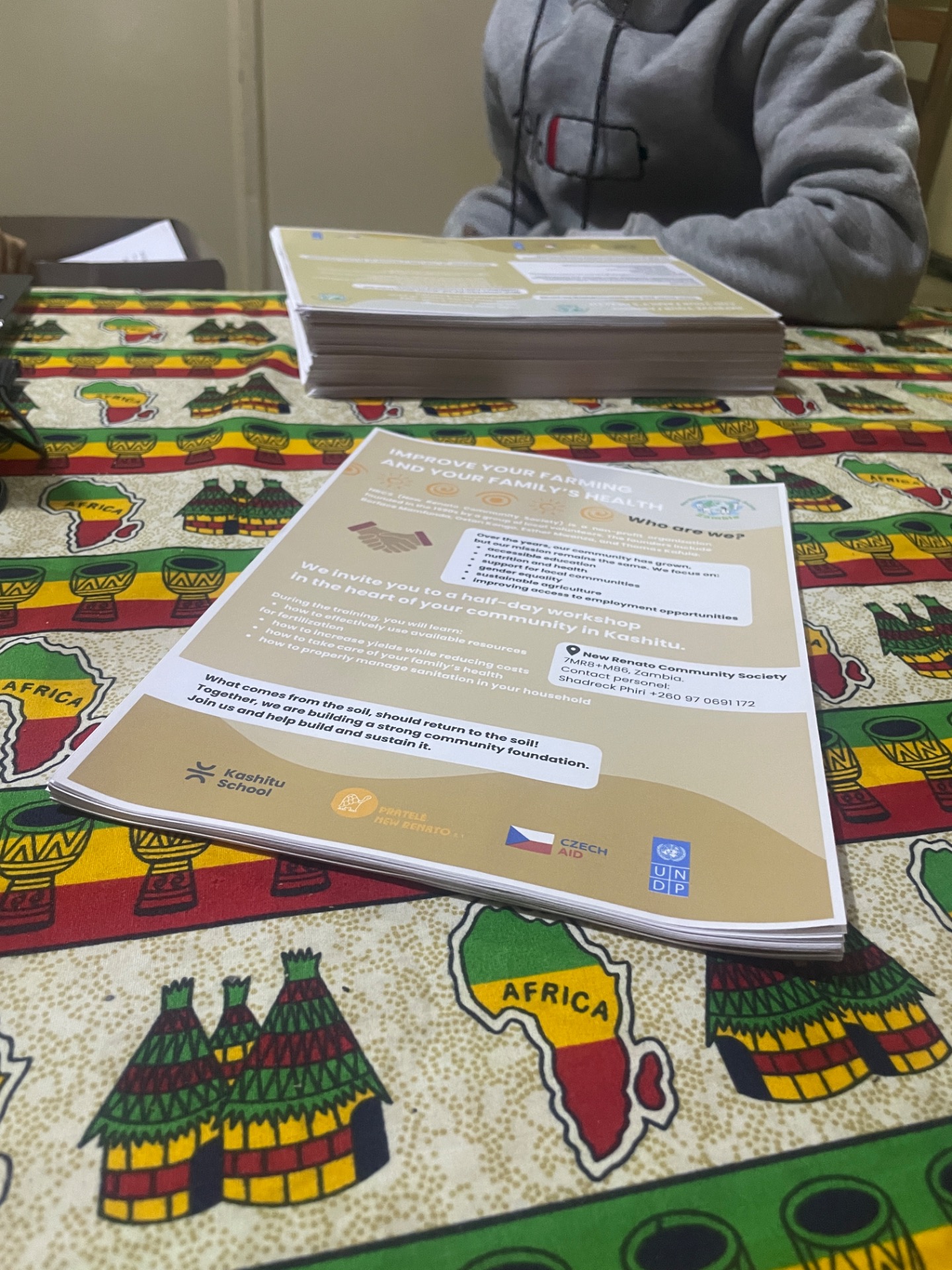
Another important milestone this week was the completion of extensive educational and research materials. We prepared and printed 500 information brochures and 500 questionnaires, which will now be used directly in local communities.
Our next step is to visit local farmers and other residents throughout the region. The aim is to gather reliable information about current farming practices, understand local opinions on the planned composting toilet project and the use of organic compost, provide essential information about the project itself, and invite community members to attend the first public educational event.
The information collected will provide an important foundation for evaluating our current activities and planning future initiatives. It will help us demonstrate the impact of our work, identify the community's priorities, and ensure that future projects respond to the genuine needs of the people of Kashitu.
Whether it is the kilometres walked in the field, the hundreds of questionnaires prepared, the carefully documented sites, or the first measurements marking out a future building, each of these activities shares the same purpose - to lay strong foundations for the long-term, sustainable development of the region.
Meaningful change in Kashitu does not happen overnight. It grows gradually through close collaboration with local communities, patient effort, and a shared vision of a better future. It is within these seemingly small steps that the power of lasting change truly lies.